How can office wallpapers support visual identity and space branding?
A wallpaper can be more than just decoration. Find out how to use wall art to define the character of a space, convey a brand message and create a cohesive experience.
A blank wall is not, by itself, a reason to add a wallpaper to it. If a graphic is used simply as a way to “fill” an empty surface, it is difficult to call this conscious space design. Things become much more interesting when we know why this particular graphic, in this particular place and for these particular users, should be there.
This is why office wallpaper is increasingly becoming part of a broader approach to visual identity and space branding.
At ADVERTIS, we see it as one of the tools that can bring a brand’s character into a physical environment, alongside signage, wayfinding, office graphics, 3D lettering and other branding elements.
What can wallpaper bring to an office?
The most important question should not be: “What can we put on this wall?”
A better question is: “What should this wall do for the space?”
Depending on the project, wallpaper can:
- strengthen a brand’s visual identity,
- tell a company or product story,
- create a specific atmosphere,
- emphasise the character of a particular zone,
- communicate organisational values,
- create a distinctive focal point,
- improve the experience of employees and visitors,
- reference the local context,
- visually change the proportions of a space.
That is why the same technology can look completely different in a technology company’s office, a hotel, a restaurant or an event space.
Different functions, different graphics
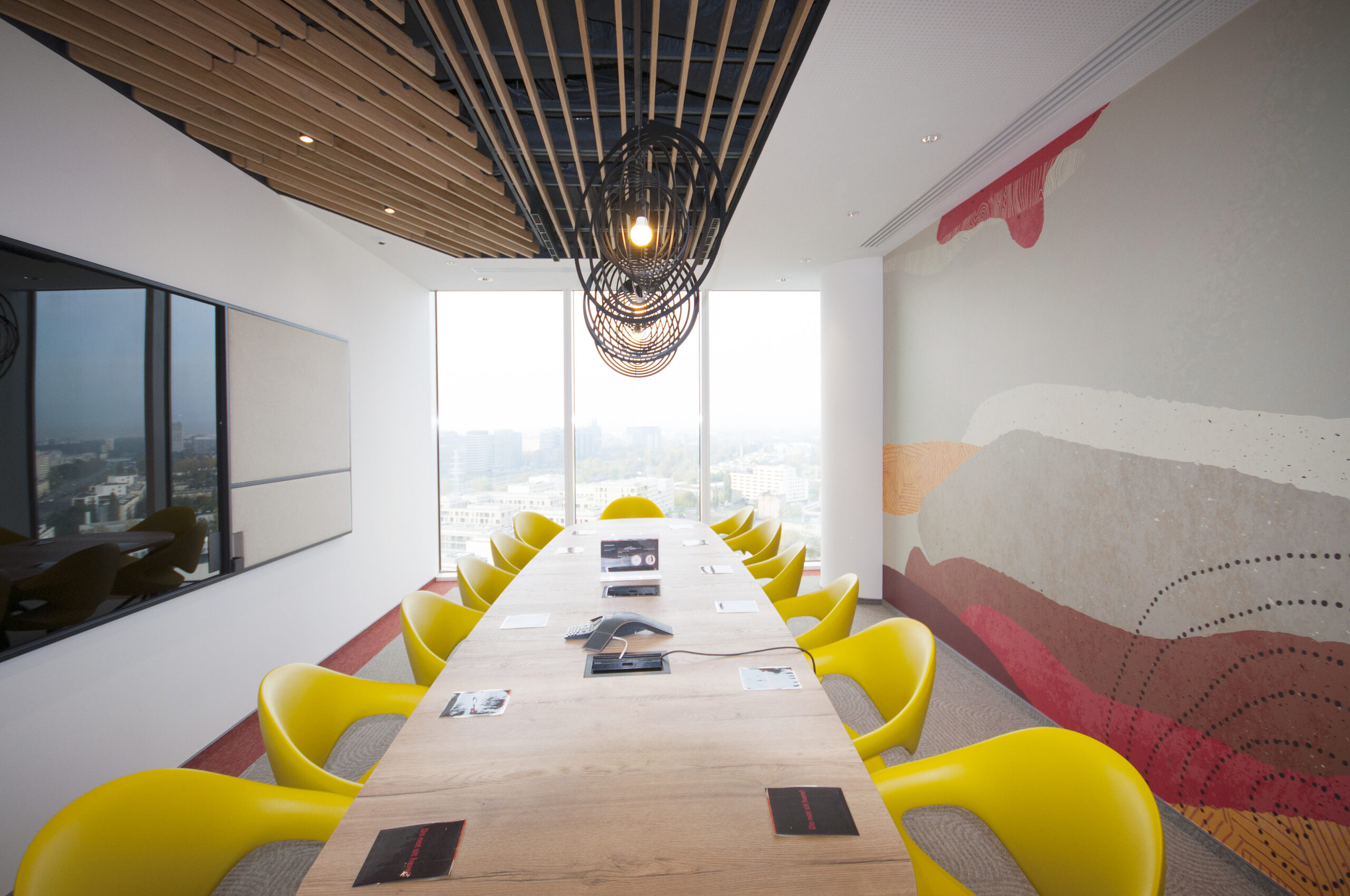
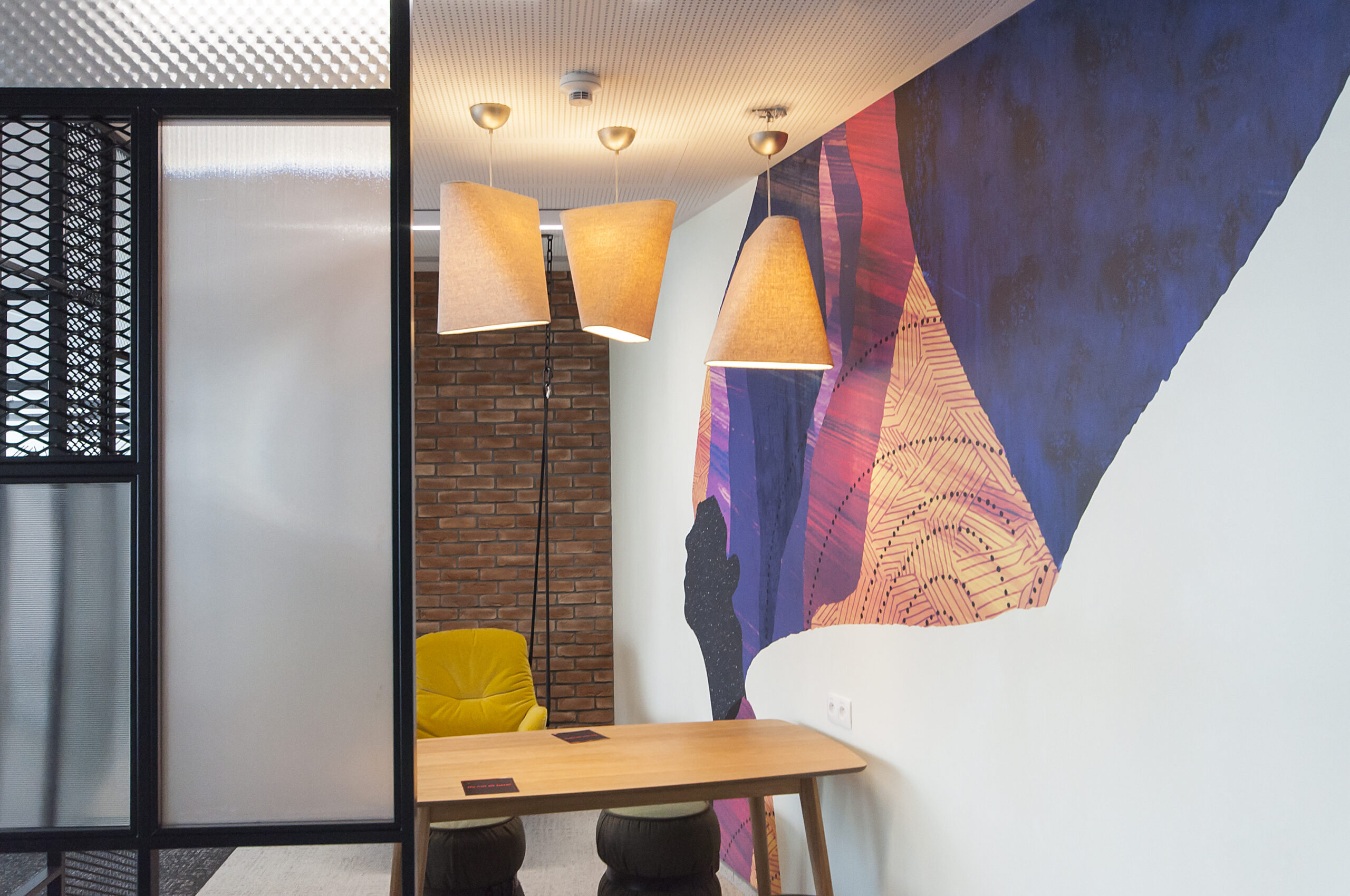
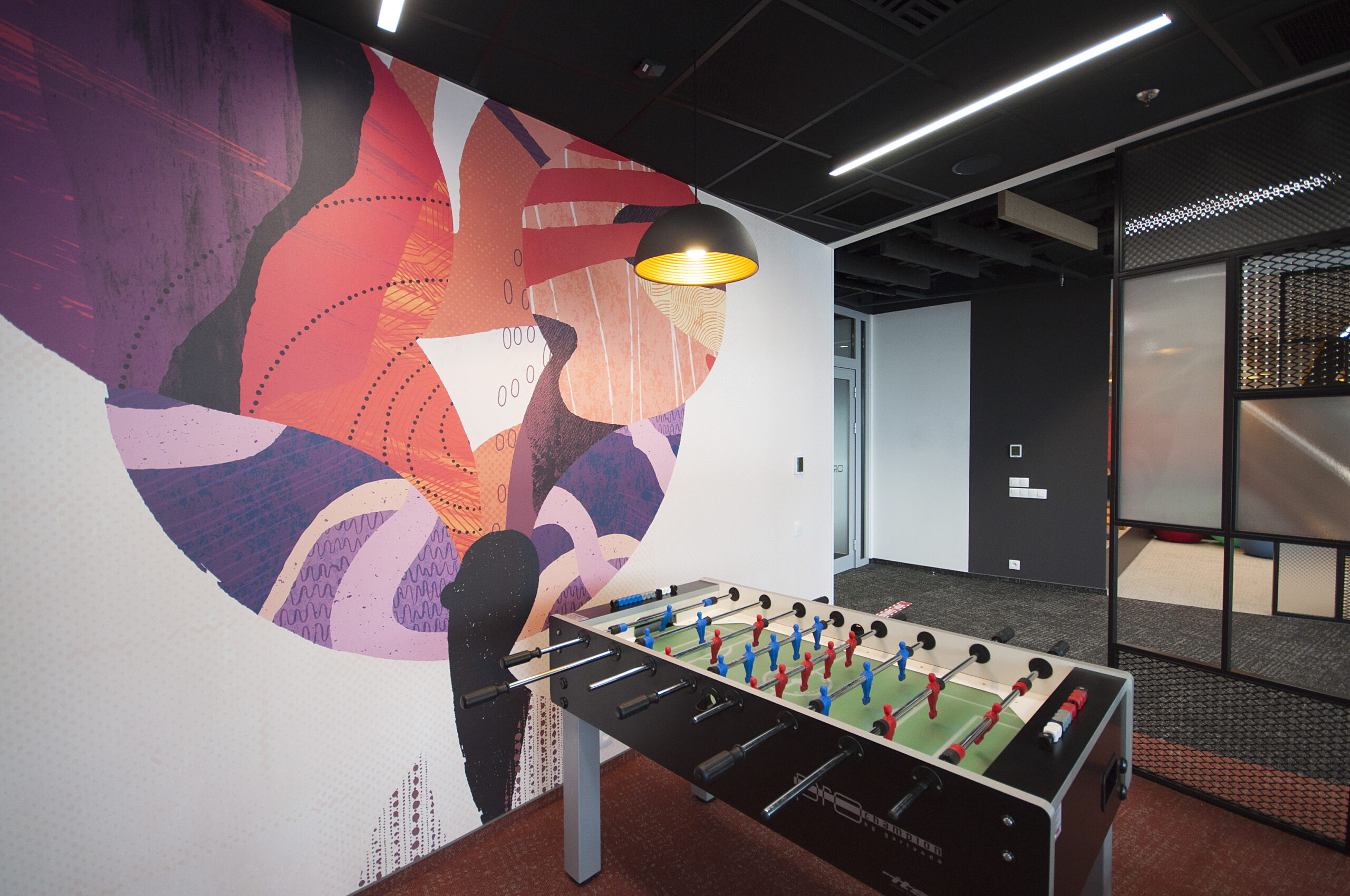
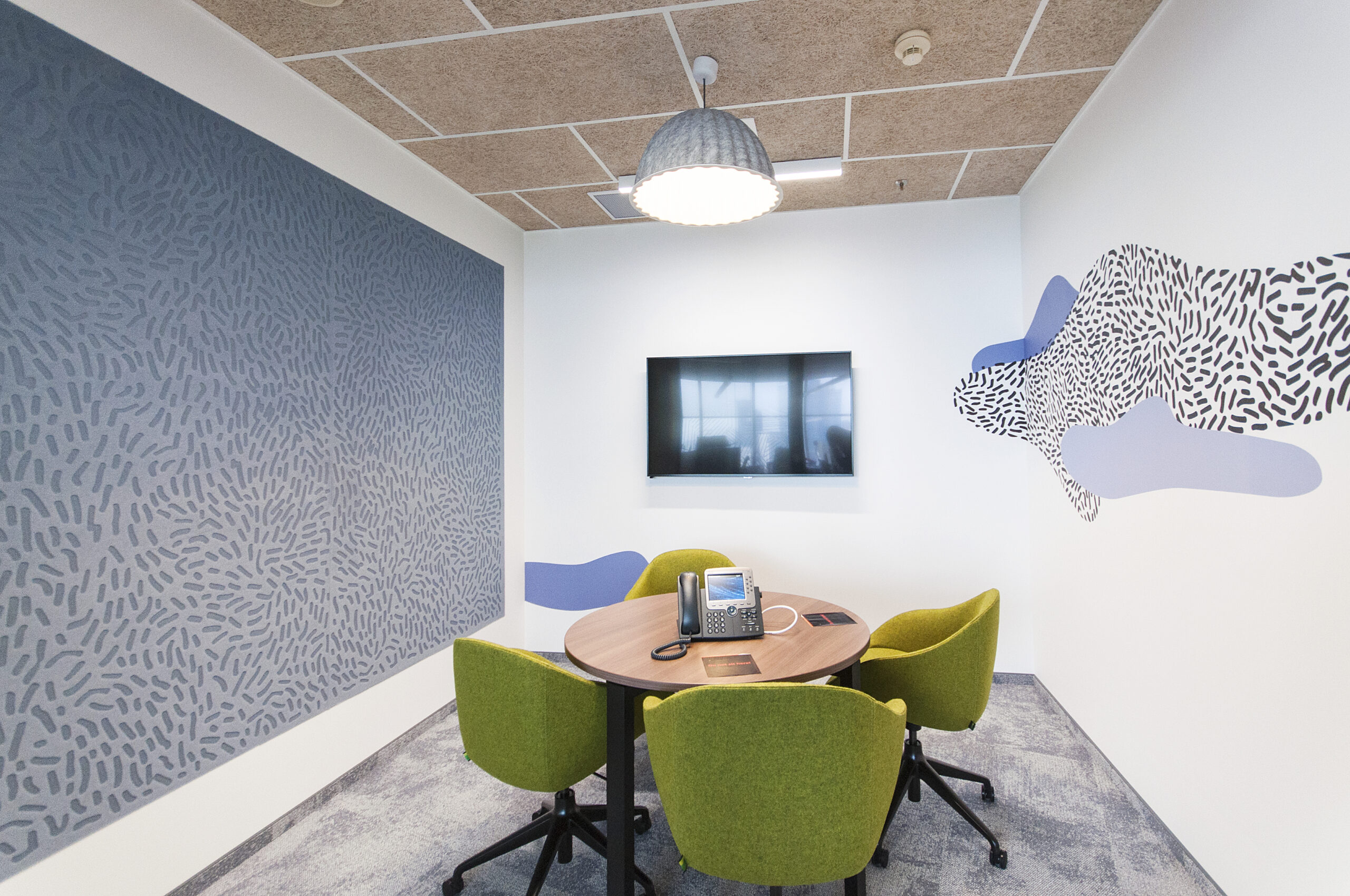
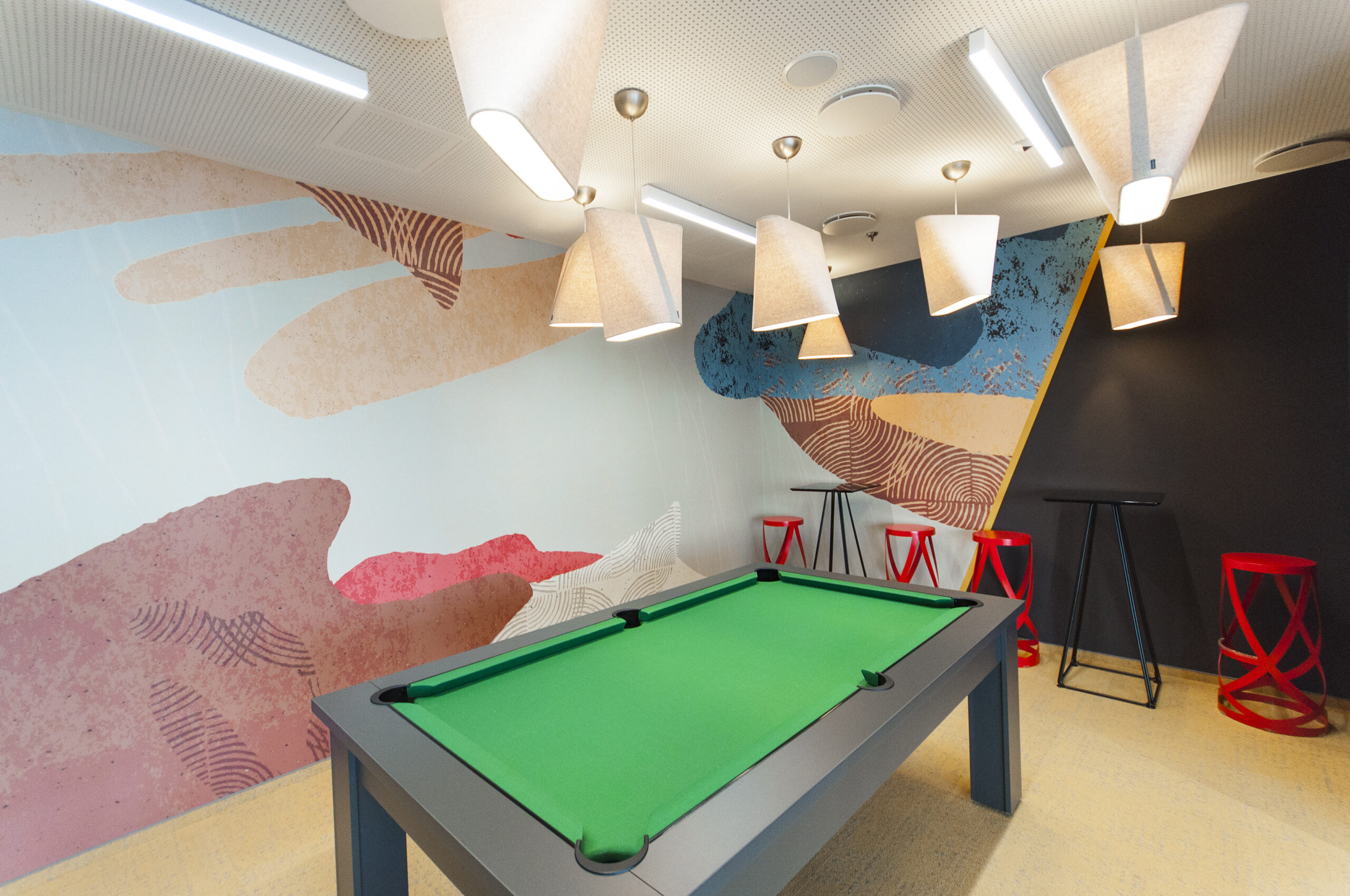
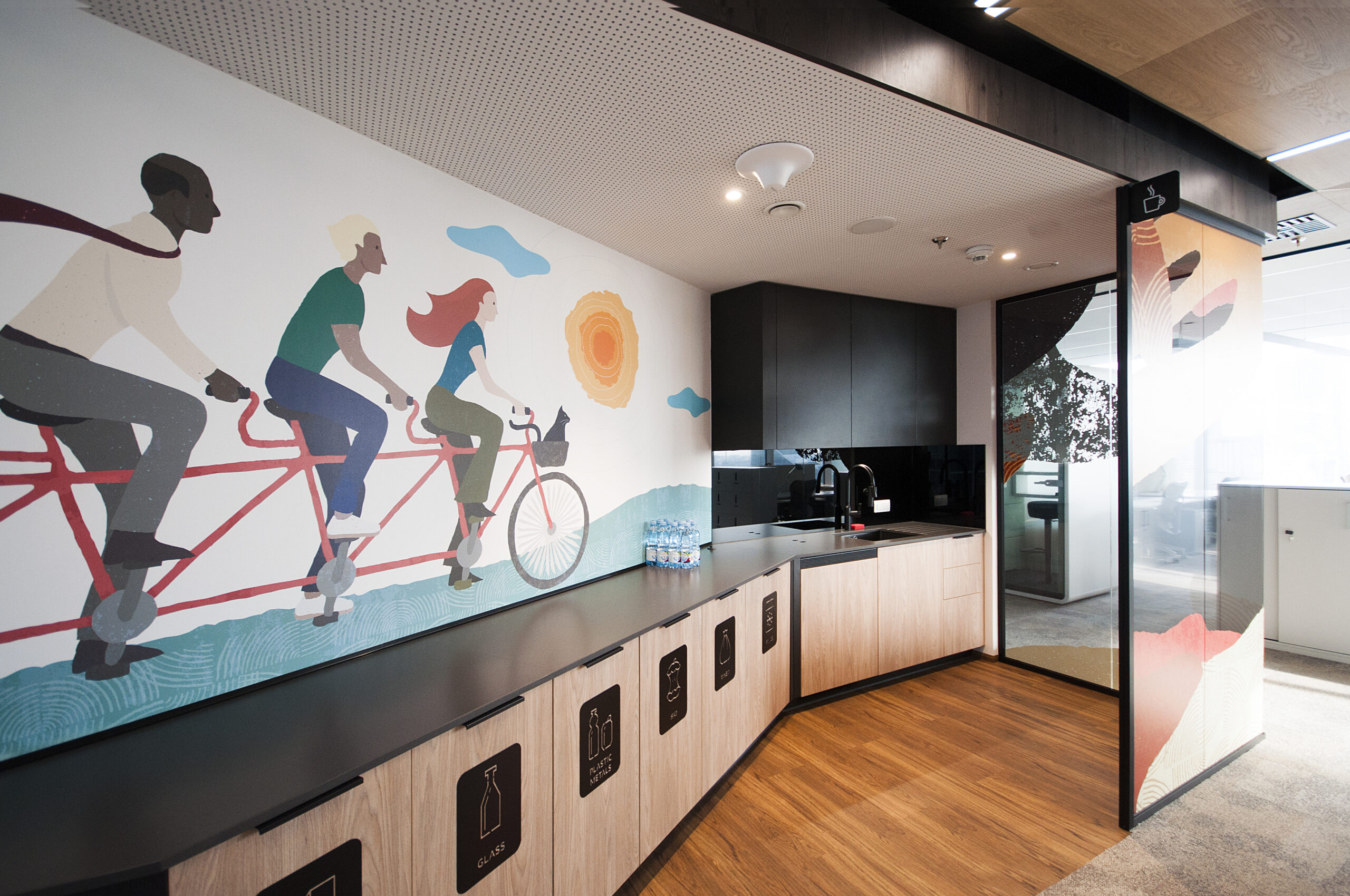
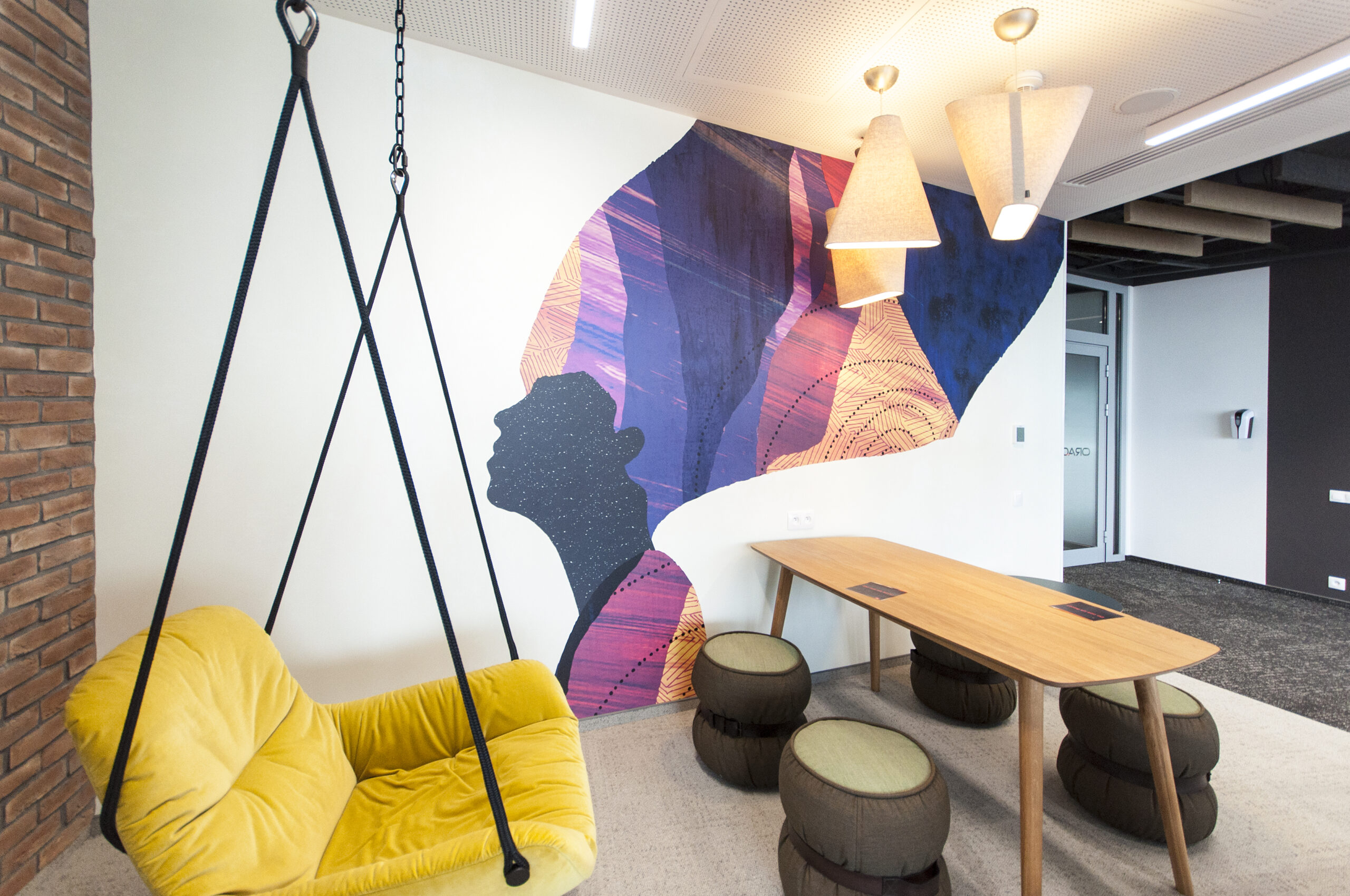
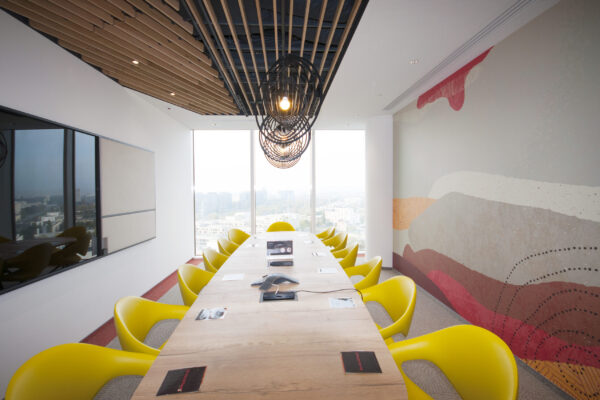
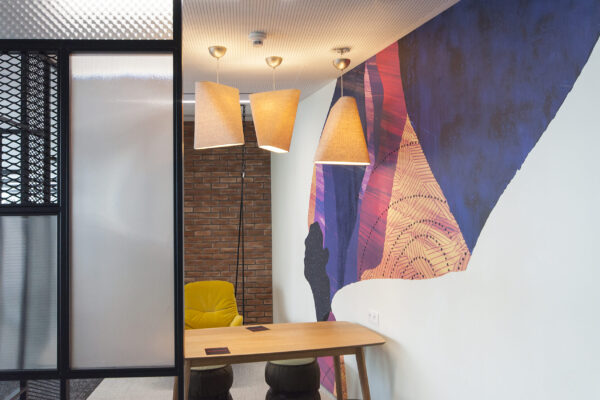
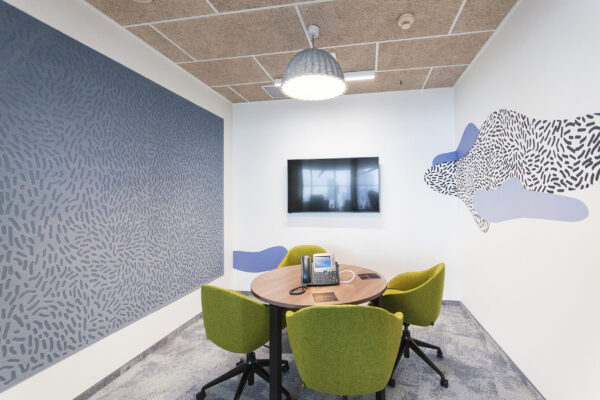
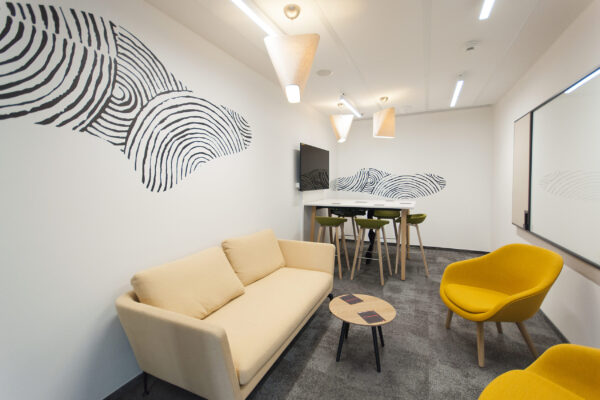
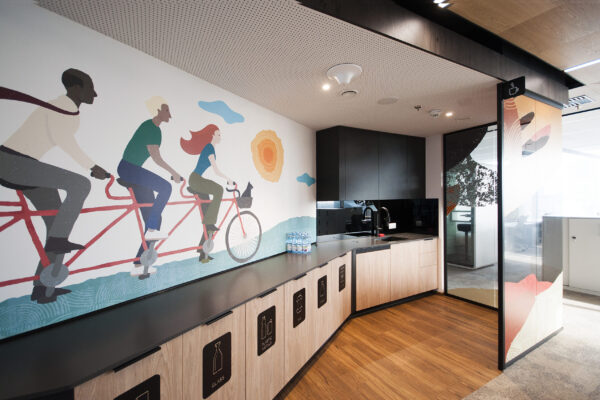
Our project for Oracle is a good example of how wallpaper can be used intentionally. The individual graphics are clearly different from one another. Some feature more recognisable motifs, while others use soft lines, irregular patterns and more abstract compositions. Despite this variety, the overall result remains coherent and clearly does not feel like a collection of random graphics.
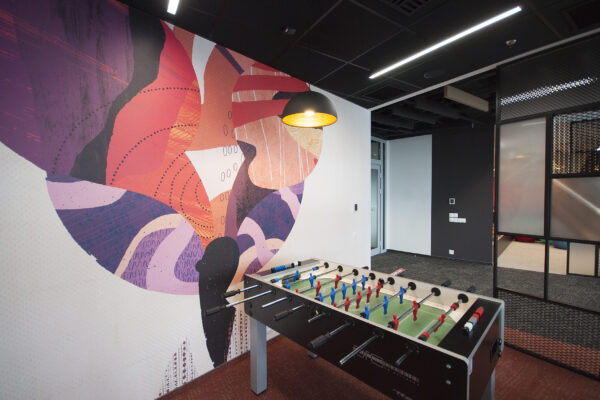
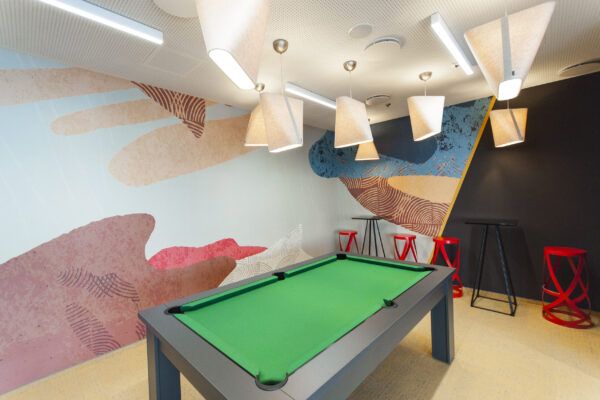
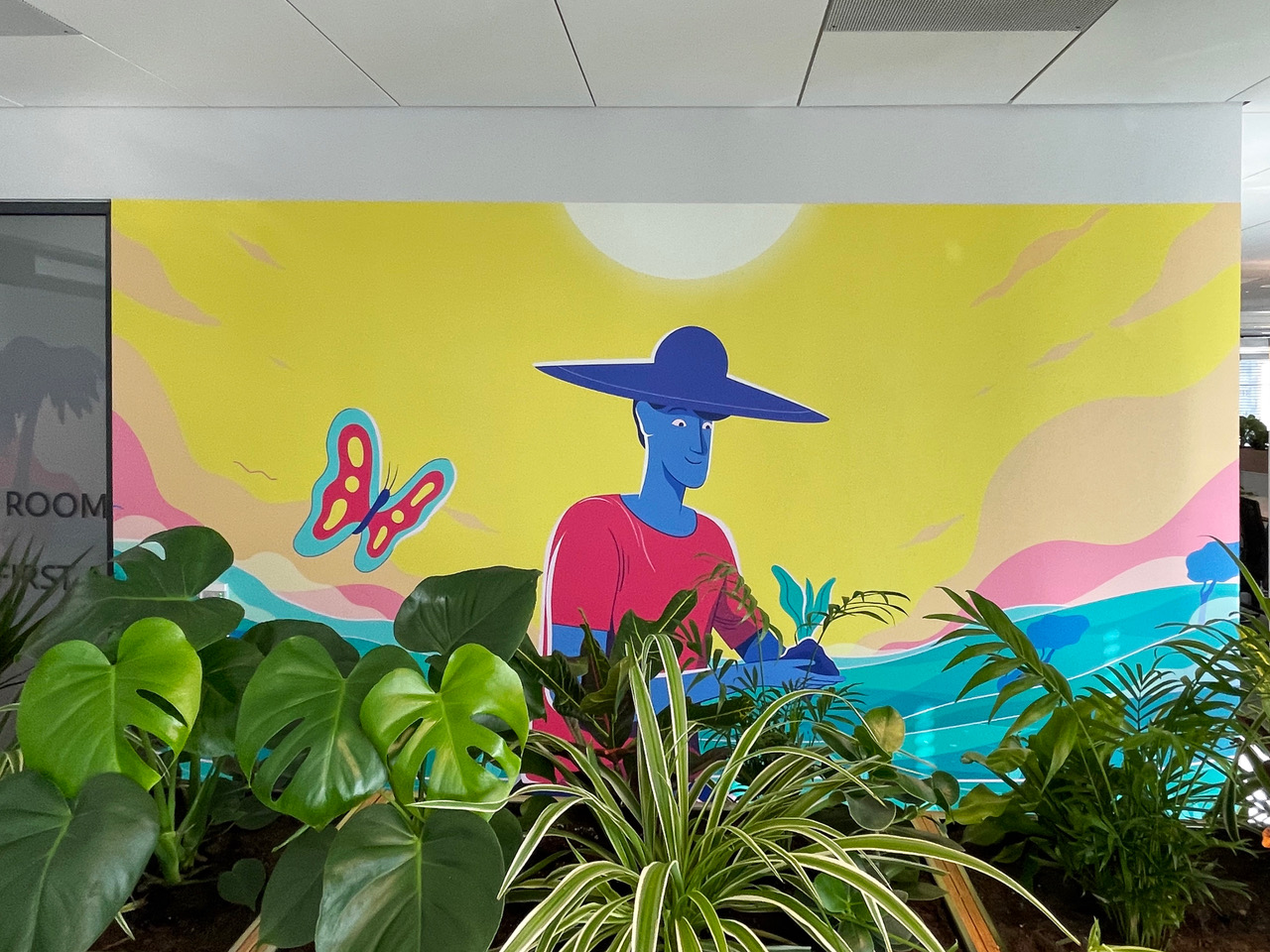
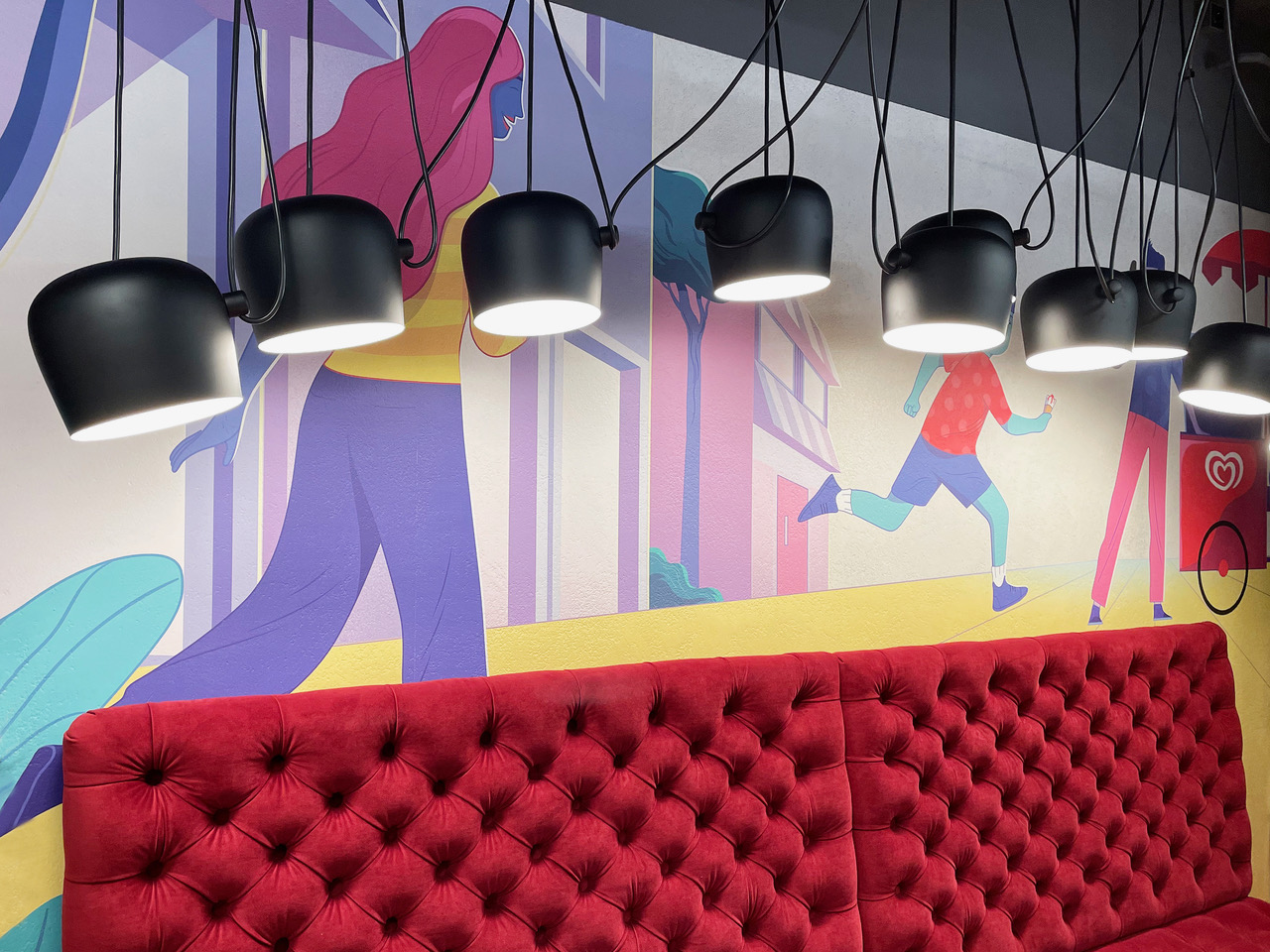
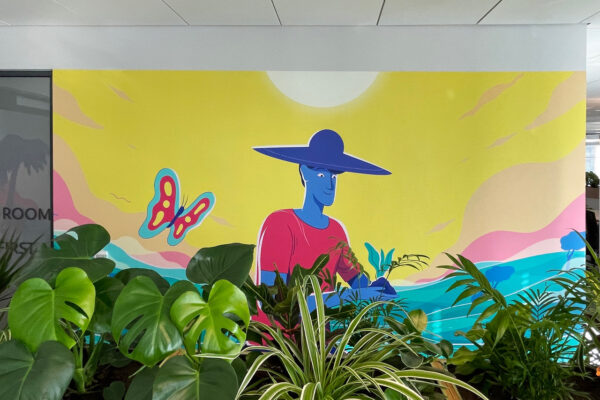
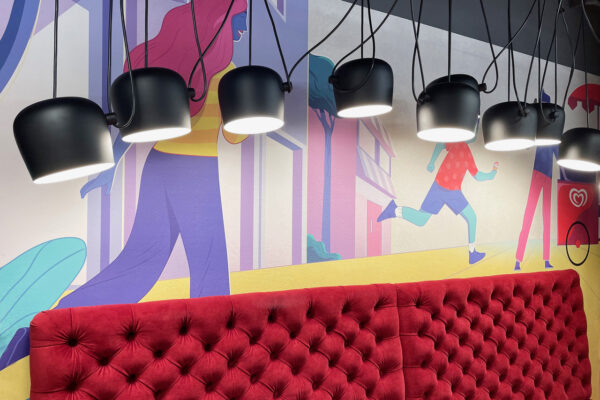
The character of the graphics also reflects the function of each space. In the kitchen and dining areas, game rooms and relaxation zones, we used more colourful, bold and lively compositions that attract attention and add energy to areas designed for interaction and spending time together.
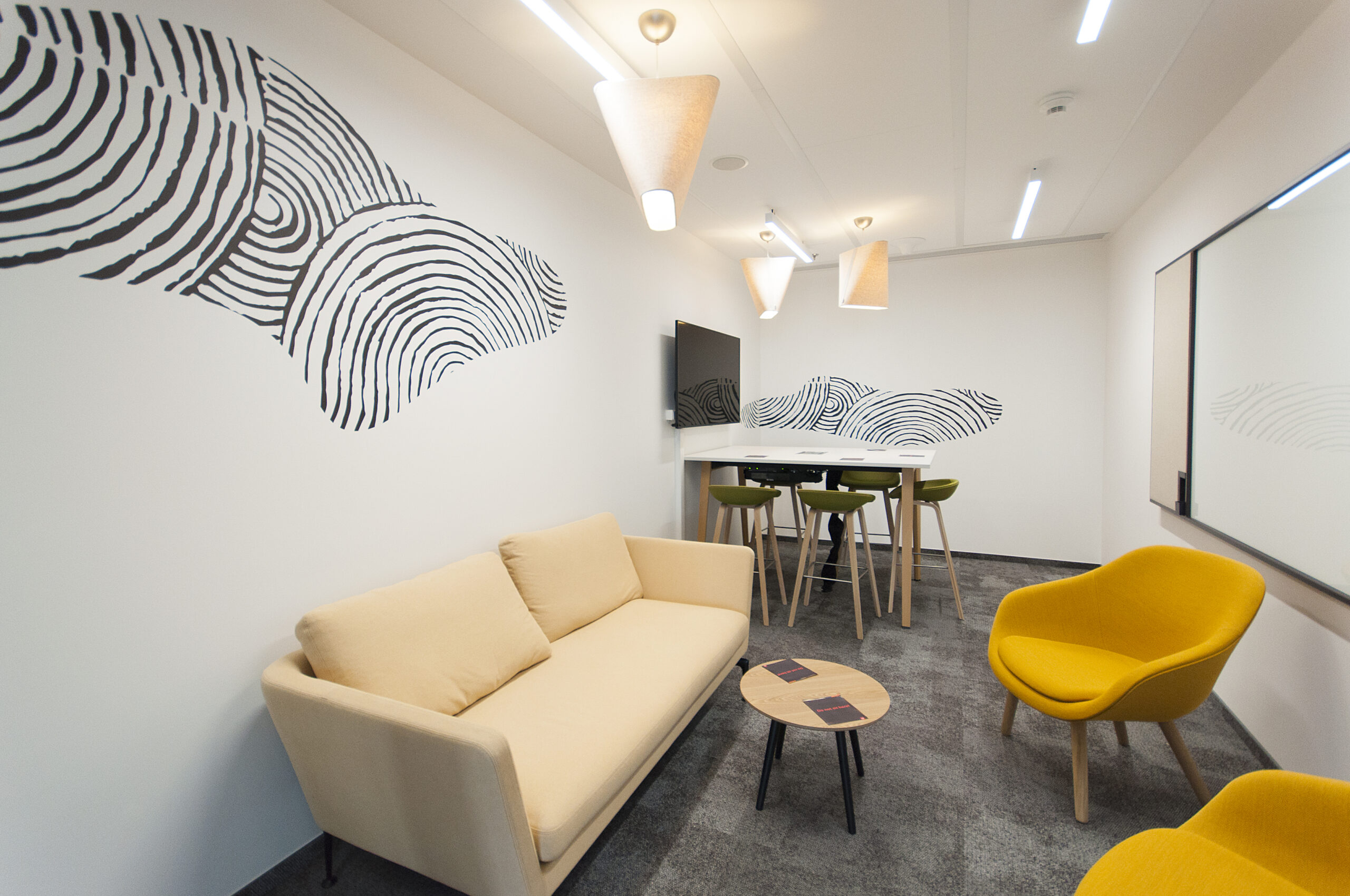
In conference rooms and smaller business meeting rooms, the graphics are more restrained. They still use colour and recognisable motifs, but in a calmer way that better reflects the function of these spaces.
It is a good example of how office wallpaper does not have to look the same throughout an interior. Consistency can be achieved not by repeating one graphic, but by consciously combining colours, forms and motifs.
Wallpaper as part of visual identity
A company’s visual identity does not end with its logo, website or printed materials. In an office environment, the brand also needs to exist in three dimensions.
Colours, typography, graphics, materials and the way information is communicated can all be translated into an interior through space branding.
Wallpaper offers a wide range of possibilities here.
It can feature a logo, tagline, photograph, illustration, pattern, brand colours or a graphic created specifically for a particular space. It can also be combined with other elements.
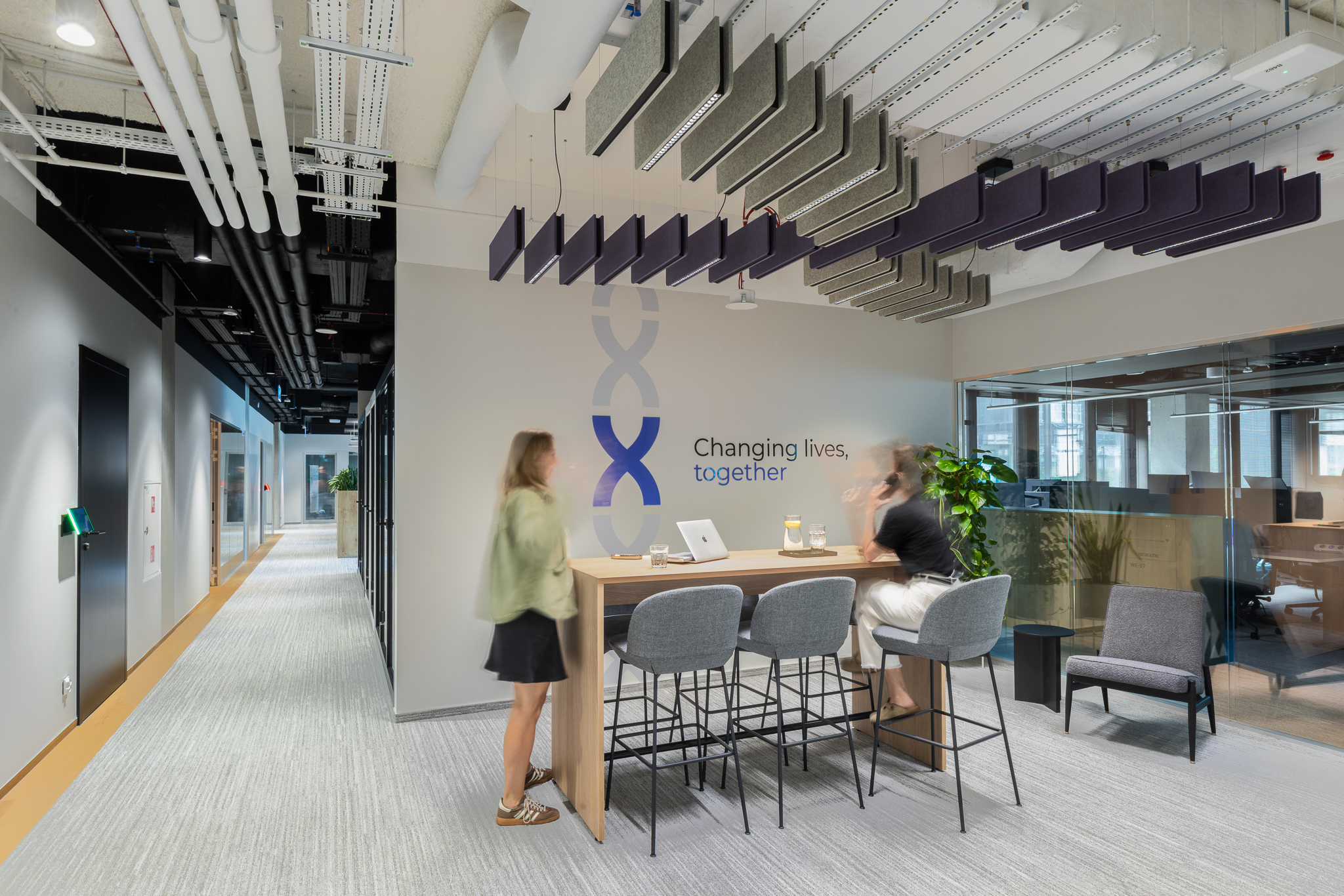
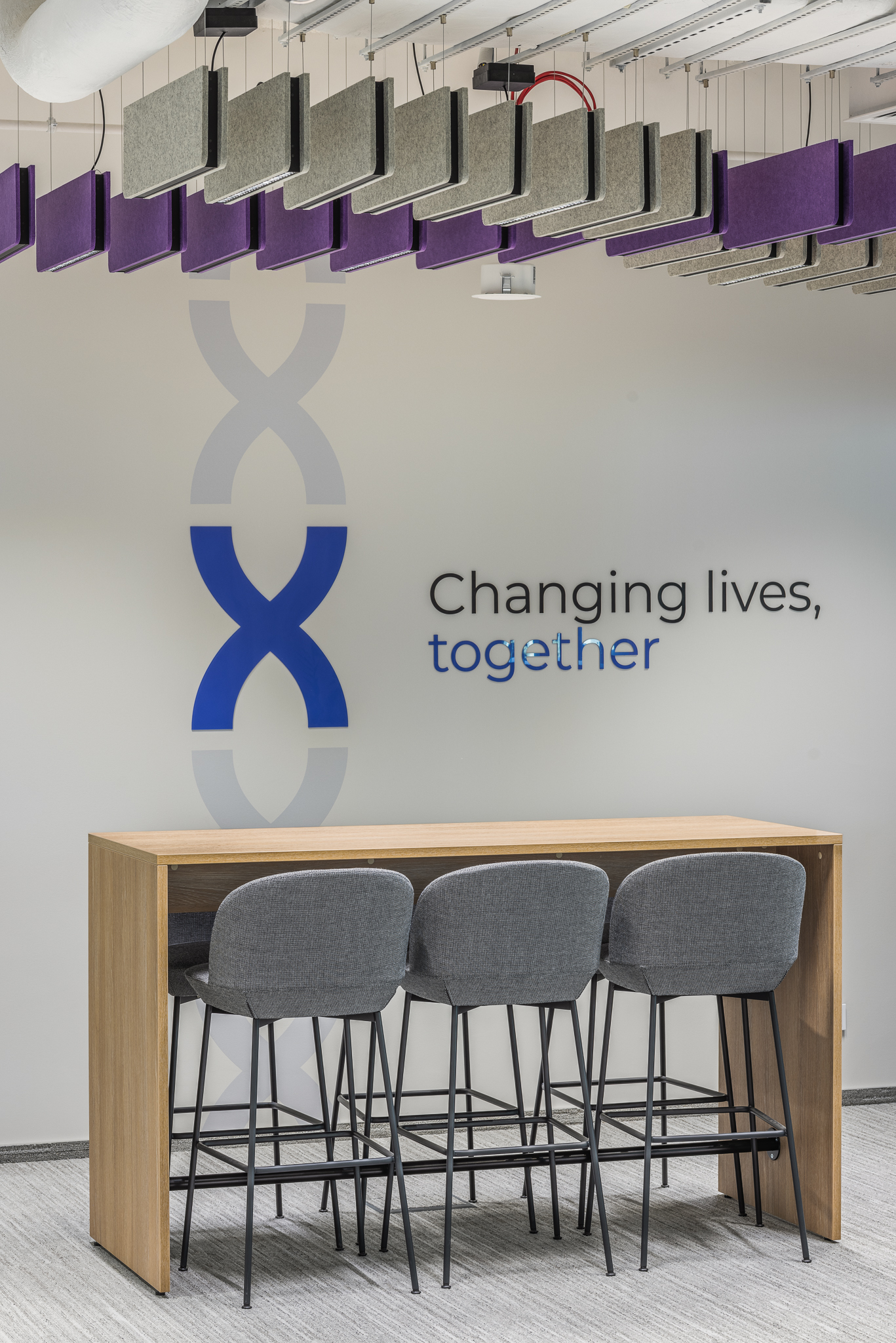
A good example is our project for Exact Sciences, where the wallpaper features the distinctive X that forms part of the brand logo, complemented by a dimensional sign made from both matte and glossy plexiglass.
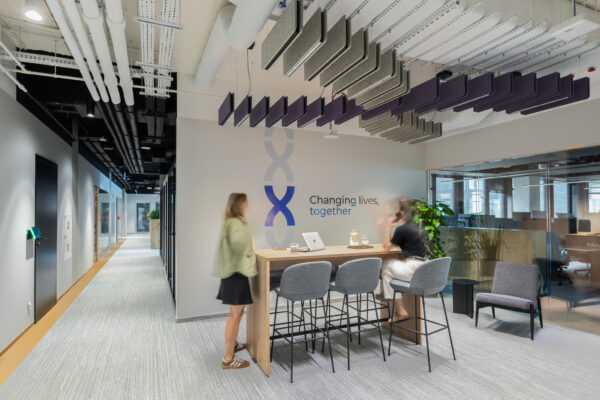
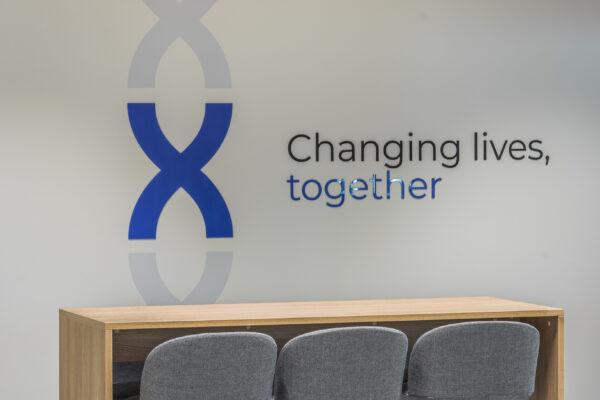
As a result, one wall combines wallpaper, branding and 3D lettering, rather than treating them as separate elements.
Wallpaper can tell a story
One of the greatest possibilities offered by wall graphics is storytelling.
Instead of placing a random pattern on a wall, a graphic can be used to communicate what a company does, its products, values or history.
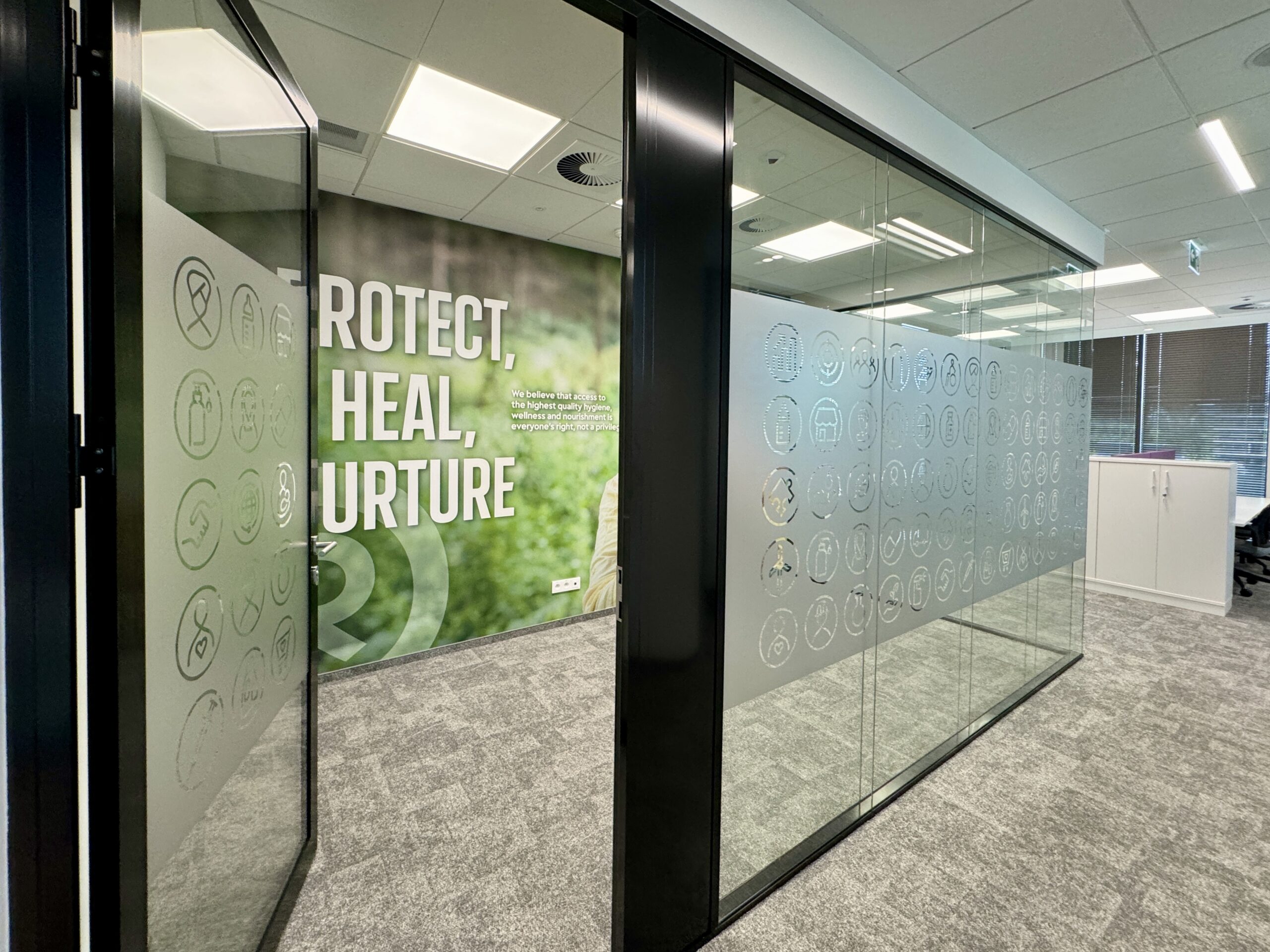
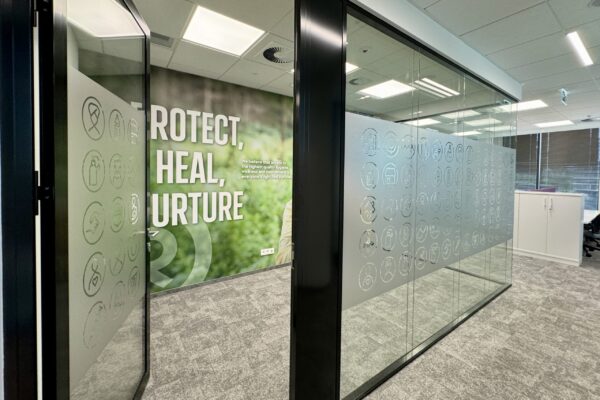
In the Reckitt office in Warsaw, the graphics reference product stories and brand communication. They include messages such as “Protect, heal, nurture”, making the branding part of the employees’ everyday environment rather than simply an addition to the interior.
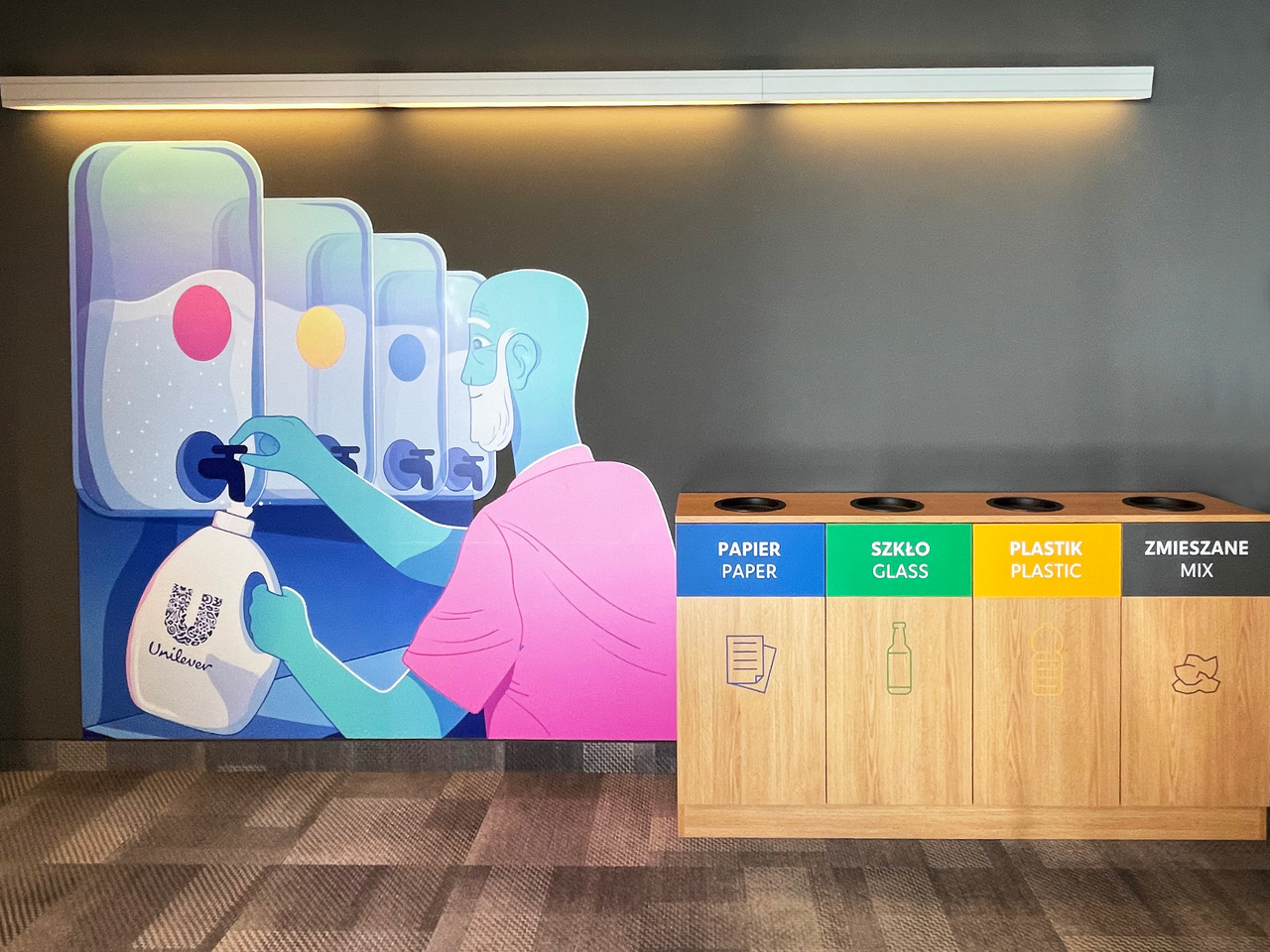
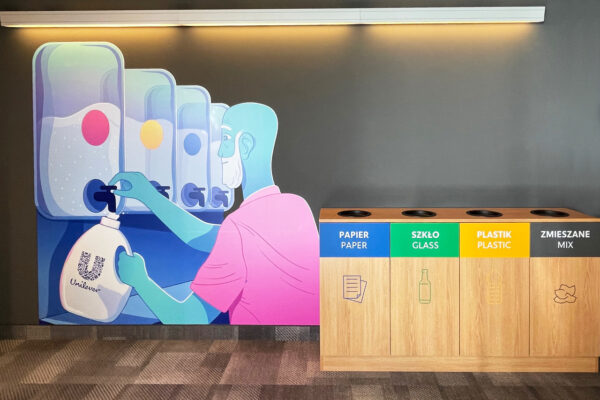
In Unilever spaces, we have used illustrations and characters connected with the company’s products, creating a more informal visual narrative.
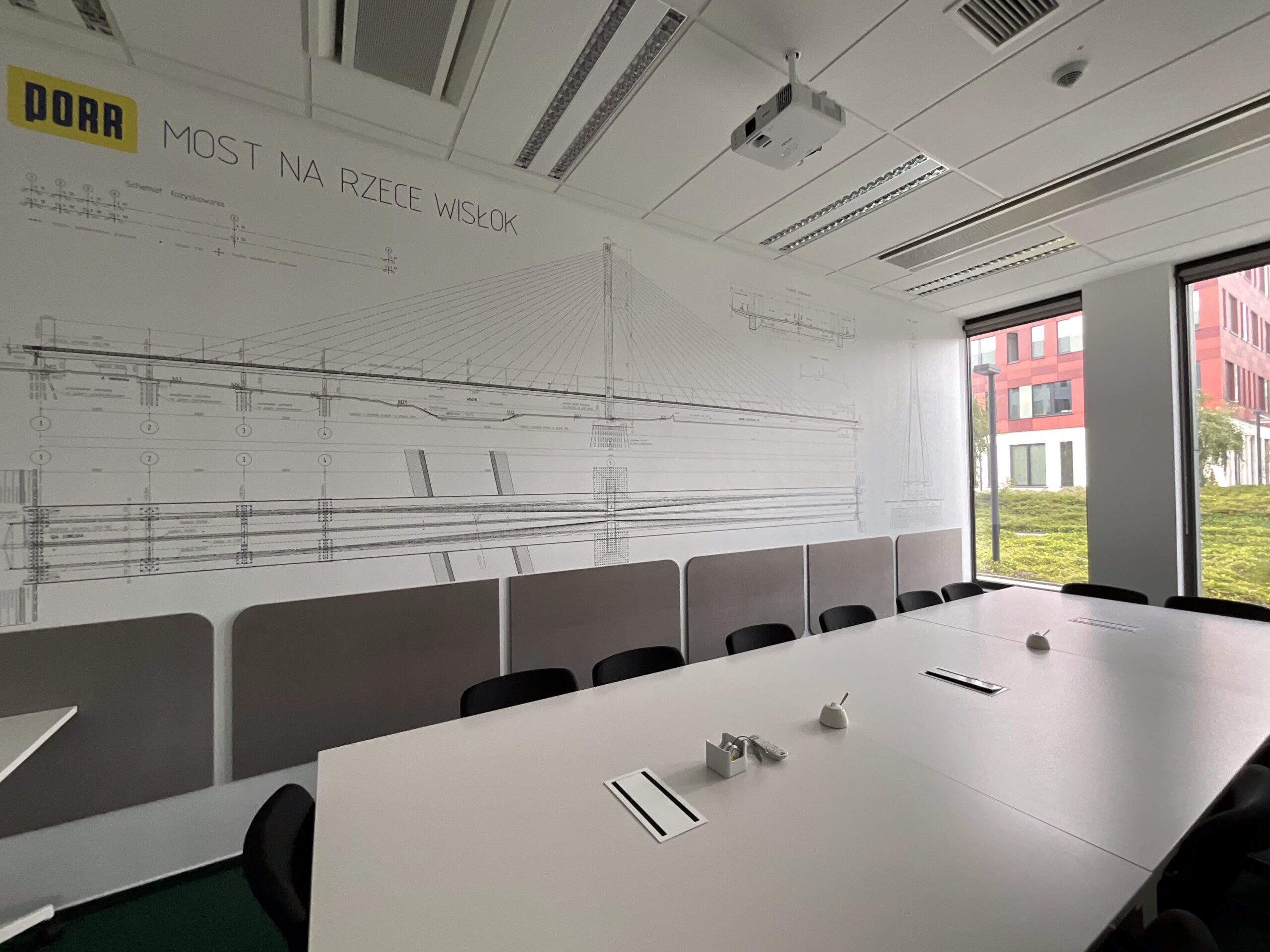
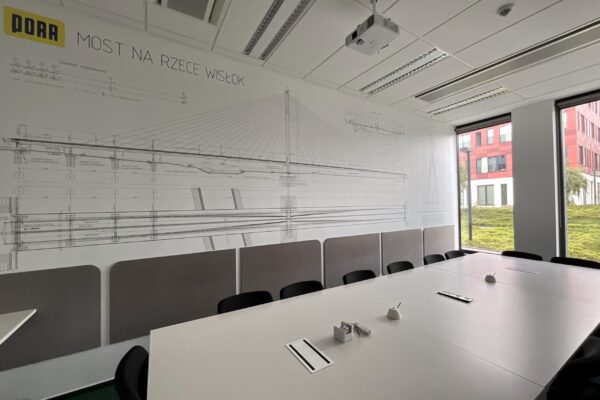
For PORR, the graphics feature technical drawings of roads, bridges and infrastructure. In the area where the company meets with clients, they become a visual representation of what the organisation does.
What if we want to tell the story of a place?
Storytelling does not have to focus solely on the brand.
A graphic can also reference the city, architecture or surroundings of a building.
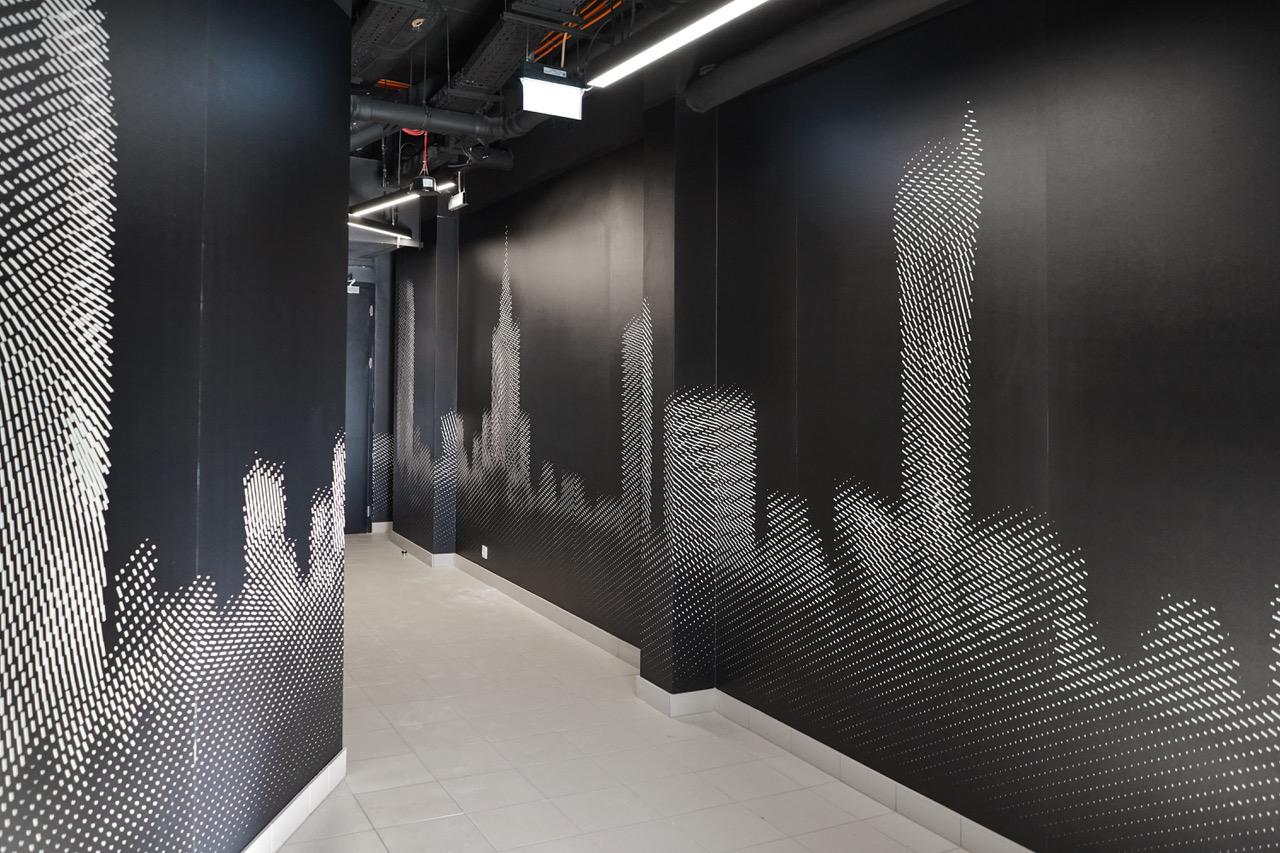
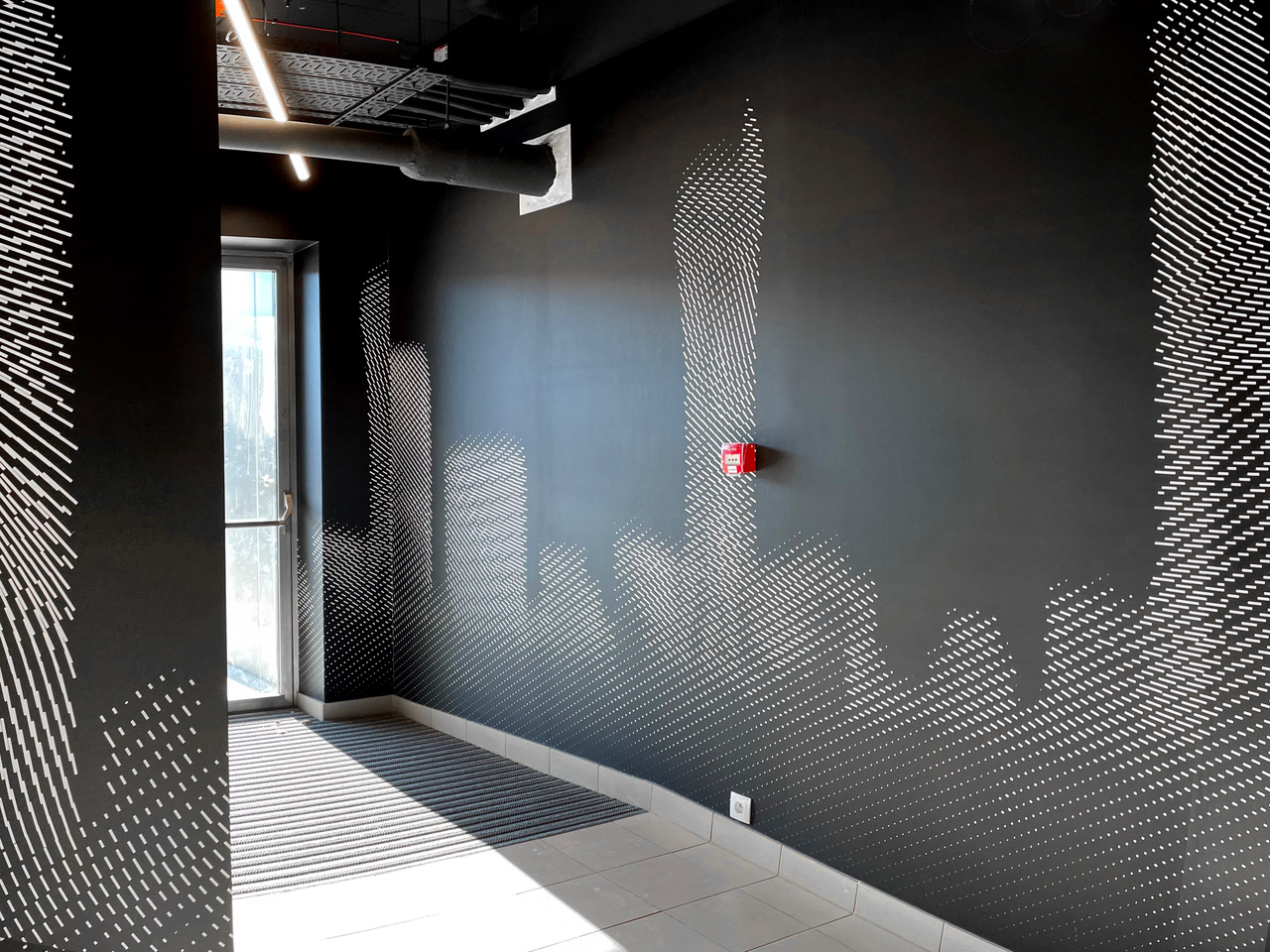
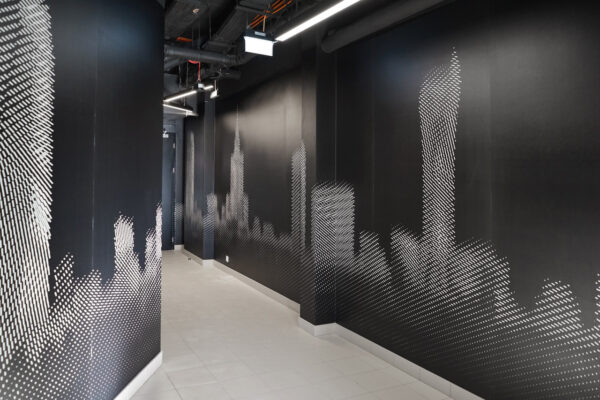
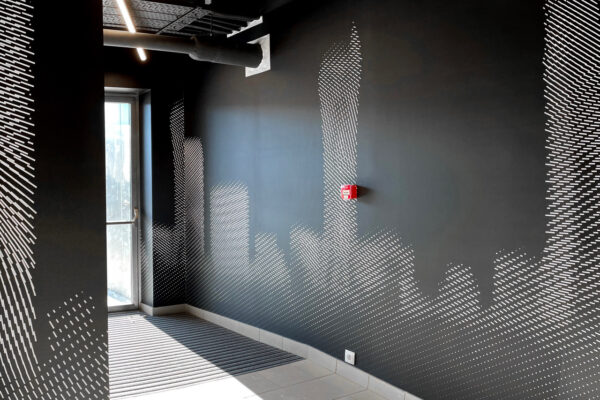
At Skyfall, a wallpaper depicting the Warsaw skyline appears in the corridor leading to the observation terrace. The graphic references what visitors can see shortly afterwards through the glass floor and from the terrace itself.
It is a good example of how a graphic can become part of the experience of a particular place.
A mural in an office can have its own story
Even more possibilities open up when a graphic is created from scratch.
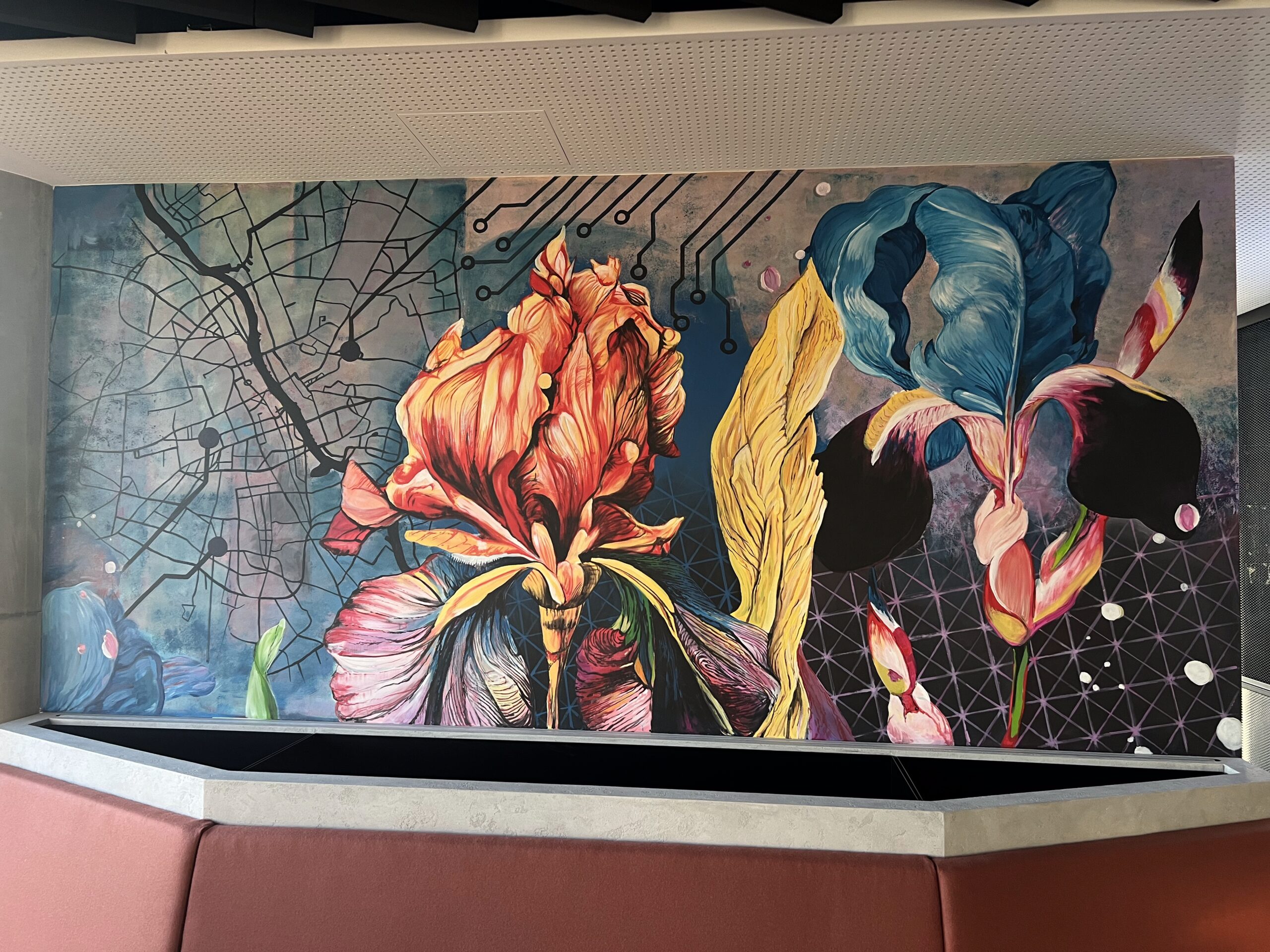
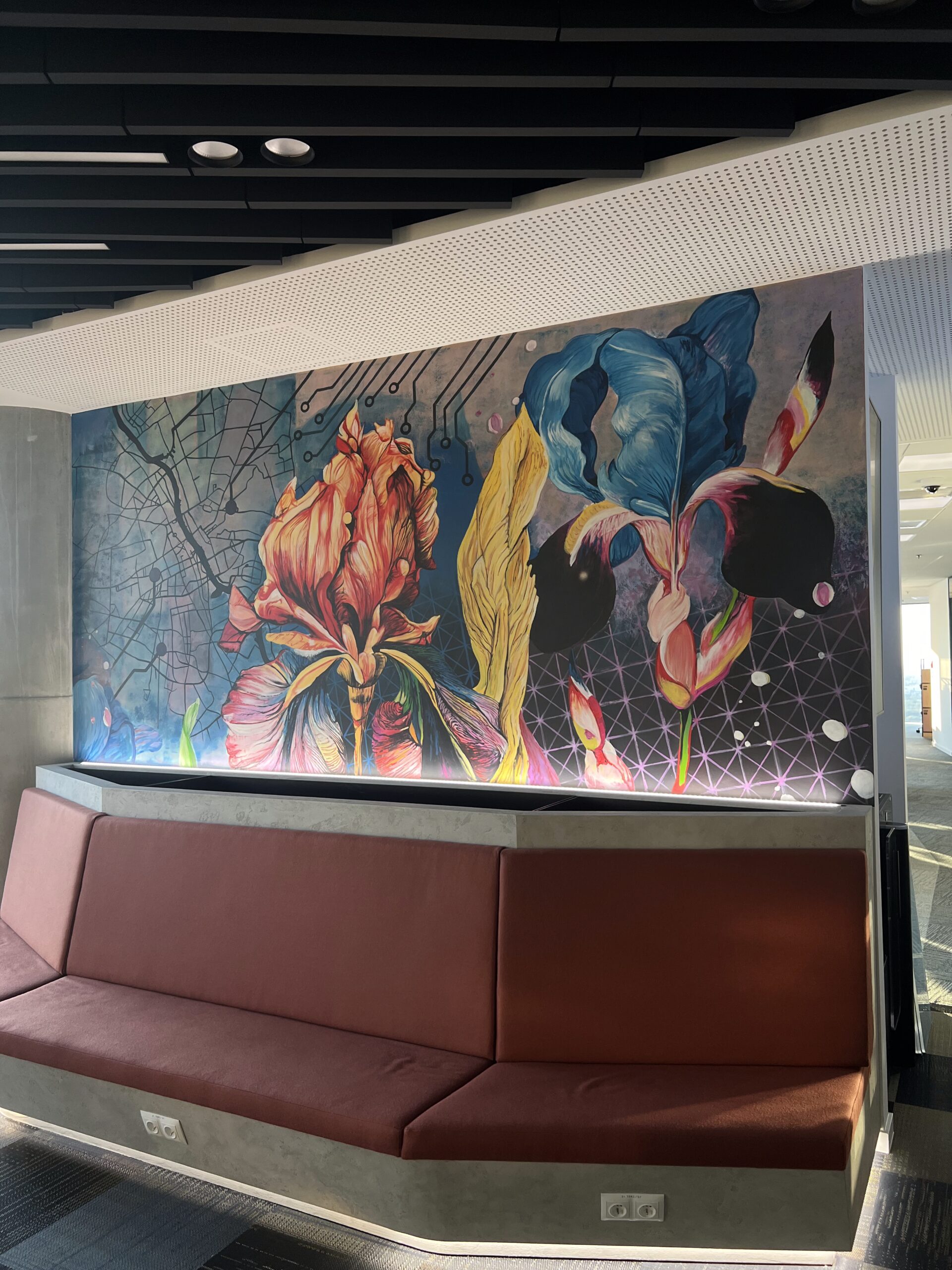
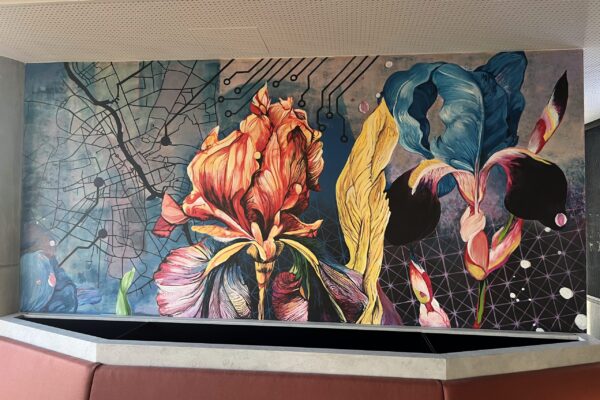
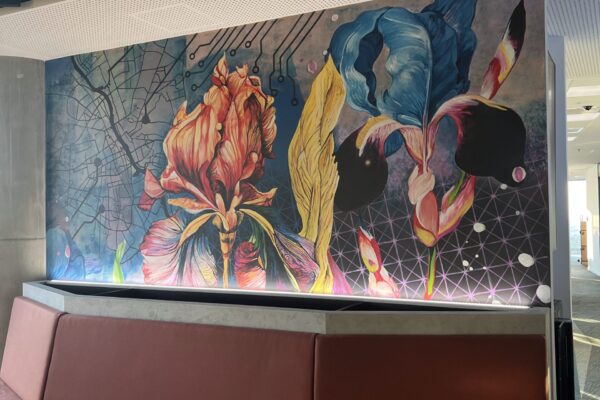
A mural was created for the P&G office in Warsaw to connect the character of the brand with the local context of its Warsaw-based IT and technology team.
The design combines technology and nature. Elements resembling integrated circuits also look like plant veins, while a map of Warsaw appears in the background. The irises reference the work of Stanisław Wyspiański.
The result is a graphic that does not communicate technology in a literal way. Instead, it brings together several layers of the story: the company, its activities, the city and its local context.
Can wallpaper influence the atmosphere of an interior?
Yes, but it is worth looking at this more broadly than through simple rules such as “green is calming and red is stimulating”.
Colour, scale, contrast, the amount of detail and the way light interacts with a graphic can all influence how a space is perceived. It also matters whether the graphic acts as a quiet background or a strong visual focal point.
In office design, it is also important to consider how many different sensory stimuli a space provides.
Joanna Jurga, who works among other things with sensory aspects of spatial design, highlights the importance of balancing different stimuli and creating a sense of security through our surroundings.
This means that interesting effects can be achieved not only through the image itself. Texture, material structure, the way a surface reflects light and additional dimensional elements can all play a role.
Wallpaper can therefore be smooth and minimalist, but it can also have a suede-like appearance, a pronounced texture or become a background for raised elements.
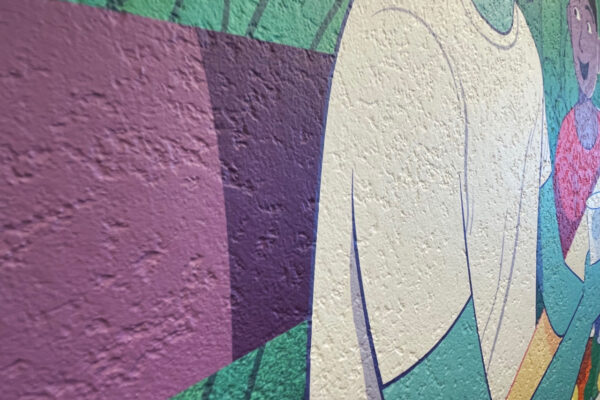
Office wallpaper does not have to be flat
This is where the design possibilities become particularly interesting.
Additional dimensional elements, lettering, logos or other details can be applied to the surface of the wallpaper. Different material structures can also be used.
This allows a wall graphic to become part of a larger composition together with 3D lettering, signage and other space branding elements.
Combining different materials can create an effect that would not be possible with a printed graphic alone.
Wallpaper and other elements of environmental signage
A well-designed space is not made up of isolated elements.
Wallpaper can work together with wayfinding, room identification, door signs, information graphics and reception signage.
For example, the colours and typography used in a wall graphic can be repeated across room signs and directional signage. This allows users to perceive the elements not as separate objects, but as part of one coherent visual identity system.
In larger projects, this can also include building signage, external signage and the identification of individual zones.
That is the difference between a single decorative element and a considered space branding system.
How do you choose wallpaper for an office?
Before choosing a graphic, it is worth answering a few questions:
1. What is the purpose of the wall?
Should it attract attention, communicate the brand, create an atmosphere, guide users through the space or simply complement the interior?
2. Who will be looking at it?
A graphic for a reception area will be different from one designed for an employee space or a meeting room used to host clients.
3. Does the graphic come from the brand identity?
It does not always have to contain a logo. Sometimes distinctive colours, a motif, typography or a particular visual language are enough.
4. How will it work with the rest of the interior?
The wallpaper should work with the architecture, furniture, lighting and other branding and signage elements.
5. Do we want a long-term effect or a solution that can be changed relatively easily?
This should also influence the choice of material and how the graphic is produced.
Custom wallpaper – design, material and production
The possibilities today go far beyond choosing a stock photograph and printing it on a wall.
A graphic can be created from scratch, based on an existing visual identity, developed from artwork supplied by the client or created together with a designer.
At ADVERTIS, we can join the process at different stages, from producing an existing design to helping translate a concept into the right material, format and production solution.
Our experience covers both office wallpaper projects and larger projects involving comprehensive visual identity, signage, wayfinding and building signage.
Where should you start when designing wallpaper?
Wallpaper design should start with the space, not with the graphic itself.
What function should the area serve? Who will use it? What do we want to communicate? How will the graphic work with the architecture, colours, lighting and other elements of the visual identity?
The answers to these questions help determine whether the space needs a quiet background, a strong visual accent, a brand-related graphic, a local reference or perhaps a completely bespoke mural.
This is also where the experience of the production partner matters: a good idea still needs to be translated into a material, format and production solution that works in the real space.